

Which babies it fits
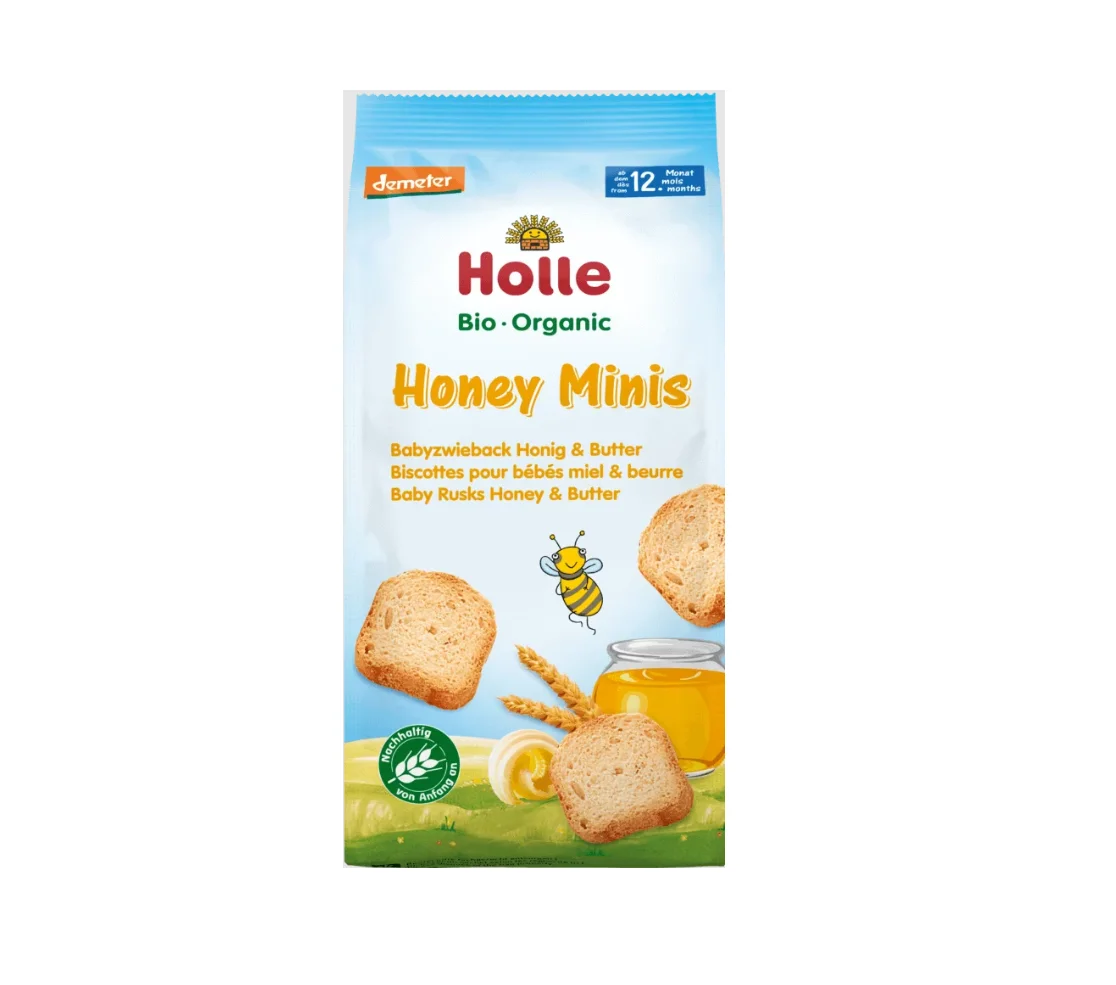
Small rusks, roughly bite-sized, sold at the 0+ months stage — the earliest shelf in the Holle range. In practice they do two jobs. A teething baby can hold one and gnaw it, and an older baby can have them softened in milk as a rusk porridge. Honey at 8% and Demeter butter at 7% give the mild sweetness the name promises; wheat flour is the bulk at 84%, with yeast and added thiamin, and nothing else, as Holle puts it. The 100 g box is meant to be shared — Holle calls them a snack for the whole family, which is a fair warning that they disappear.
The comparison that matters
Against Holle Organic Infant Follow-on Formula 3 with A2 milk 400 g the distinction is simple: that tin is a milk feed, measured and mixed with water, and it is what a baby drinks; these are solid food to hold or to crumble into a bowl. A rusk adds to a diet, it does not stand in for a milk feed at any stage.
Things people ask before ordering
Nothing to prepare. They can be handed whole to a baby who can sit and chew, or broken up and soaked. Holle’s warning is specific: never leave a baby eating breadcrumbs unsupervised, since dry crumbs are easy to inhale.
Once the box is open, keep it dry and cool and use the contents within 2-3 weeks. In damp air the rusks soften and lose their bite.
Allergens: wheat and milk are in the recipe, and the pack declares possible traces of sesame, mustard, lupins and soya. The honey is 8% of the mix, so the sweetness stays mild rather than sticky.